Google, ChatGPT or TikTok? Where Will Your Next Customer Find You?
For two decades, the Canadian business playbook was straightforward. Build a website, rank on Google, answer the phone. That formula worked because search was centralised.
It is not anymore.
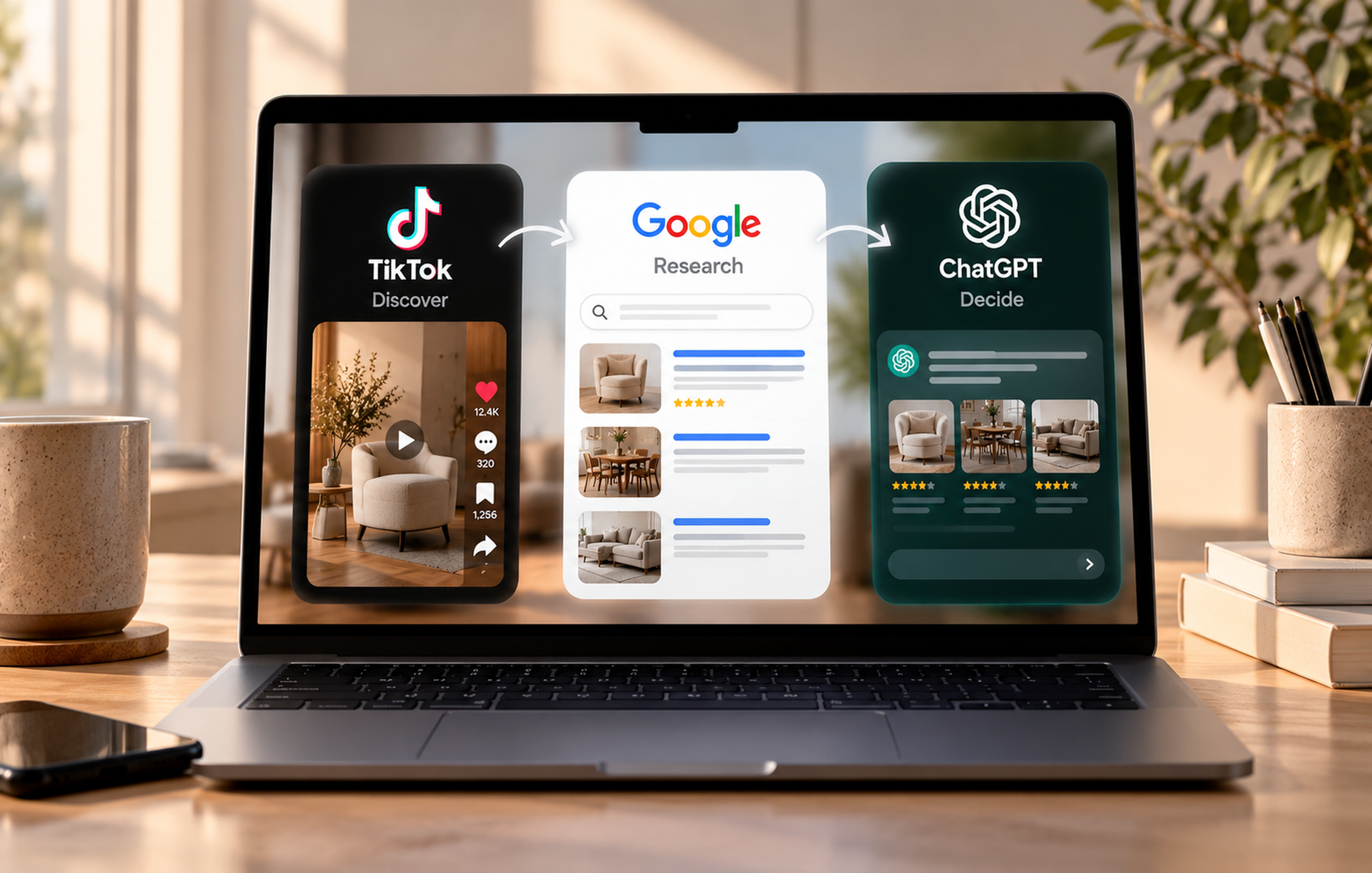
Today, a Canadian buyer discovers your brand on TikTok, researches your credibility on Google, and asks ChatGPT for a final recommendation before converting. The journey touches three platforms before it reaches you, and if you are only visible on one, you are losing customers at every other stage without knowing it.
The one-box world of search is over. Here is what replaced it and what your brand needs to do about it.
Where Do Customers Find Businesses Online in 2026?
Businesses find customers online on several different platforms.
Google handles high-intent validation. TikTok handles discovery and visual proof. ChatGPT handles contextual comparison and final recommendation. These are three distinct buyer moments and each one requires a different type of presence.
The Canadian brands winning across all three are not running three separate strategies. They are building one coherent digital footprint that functions differently depending on which platform a buyer encounters first. The brands that have not made this shift are competing for a shrinking share of a buyer journey that now starts somewhere they are not.
How Do You Rank a Business on Google in 2026?
Ranking on Google has not changed at its foundation. Technical health, domain authority, quality content, and local signals still drive rankings. What has changed is what ranking actually delivers.
Google AI Overviews now answer straightforward queries directly on the results page. The user reads the summary and leaves without clicking. Organic click-through rates drop 61% on queries where an AI Overview appears, even for the page ranked number one, according to Seer Interactive’s 2025 research.
Google is still the ultimate closer for high-intent local searches. A buyer in Calgary searching for emergency plumbing or a Toronto startup looking to book a consultation still turns to Google Maps and Google Search. Your Google Business Profile, local citations, and review volume all feed directly into how prominently you appear at that moment.
Critically, Google Search Console now tracks connected TikTok and Instagram profiles, allowing you to see how social video content pulls Google traffic. The platforms are no longer operating in isolation. Build your growth and performance strategy across search and social as one connected system rather than separate projects.
How Do You Make Your Brand Appear in AI-Generated Answers?
Ranking in AI results requires a different approach than traditional SEO, and most brands have not made the shift yet.
To appear in AI-generated answers, create detailed content that directly answers specific buyer questions. Keep brand information consistent across your website, reviews, directories, and third-party publications. Build credibility through digital PR, authentic reviews, and comprehensive product or service pages. AI tools favour credible, well-documented sources when recommending brands to potential customers.
OpenAI’s ChatGPT Ads have now officially launched for free-tier users in Canada, turning conversational AI spaces into direct marketing channels. The window to establish organic AI visibility before paid competition intensifies is open right now. Request a visibility audit and we will show you exactly where your brand stands across Google, ChatGPT, and Perplexity before competitors claim the position first.
Do Businesses Need SEO, GEO, and Social Media Marketing?
In 2026, businesses must say yes to all three, and here is the specific role each plays.
TikTok is where the discovery happens. Buyers under 40 use it as a search engine for visual proof. A café tour, a product demonstration, a rapid explainer from a credible business owner. TikTok builds instant familiarity before a buyer has any other interaction with your brand. Optimising purely for abstract keywords and ignoring short-form visual content means missing the spark stage of the buyer journey entirely.
The shift in TikTok search behaviour is structural. Users are typing full sentences into the TikTok search bar and expecting relevant, authentic results. Brands that create content answering the specific real-world questions their customers ask every day appear in those results. Brands publishing polished corporate content that does not match how people search on the platform do not.
See how Headstartt builds social media strategies that connect TikTok and Instagram discovery to measurable business outcomes.
How Can You Turn Online Visibility Into Paying Customers?
Turn visibility into sales by aligning your SEO, GEO and social strategy with each platform’s role in the buyer journey.
TikTok: Build awareness and visual trust through content that answers early-stage buyer questions.
Google: Capture high-intent customers through local SEO, an optimised Google Business Profile and strong customer reviews.
ChatGPT and AI search: Earn recommendations with accurate brand information, detailed service pages and consistent third-party mentions.
Take the five-minute test and ask ChatGPT and Gemini a relevant service query for your city. Check whether your brand appears, which competitors feature and why they’re recommended.
How Headstartt Builds Visibility Across Every Channel Your Buyers Use
Digital marketing channels for businesses in 2026 are not a choice between Google, TikTok, and AI. They are a system where each platform feeds the next stage of the buyer journey.
At Headstartt, we build multi-channel digital strategies for Canadian e-commerce brands that account for how buyers actually move from discovery to decision. Traditional SEO, generative engine optimisation, social-first content, and AI brand visibility built as one coherent strategy rather than isolated projects.
The brands showing up across all three channels are not spending more. They are spending smarter across a wider footprint.
Request a strategy session and let’s map exactly where your brand is visible, where it is not, and what it will take to show up wherever your next customer is looking.