SEO Isn’t Dead. Search Has Just Gotten a Lot Bigger
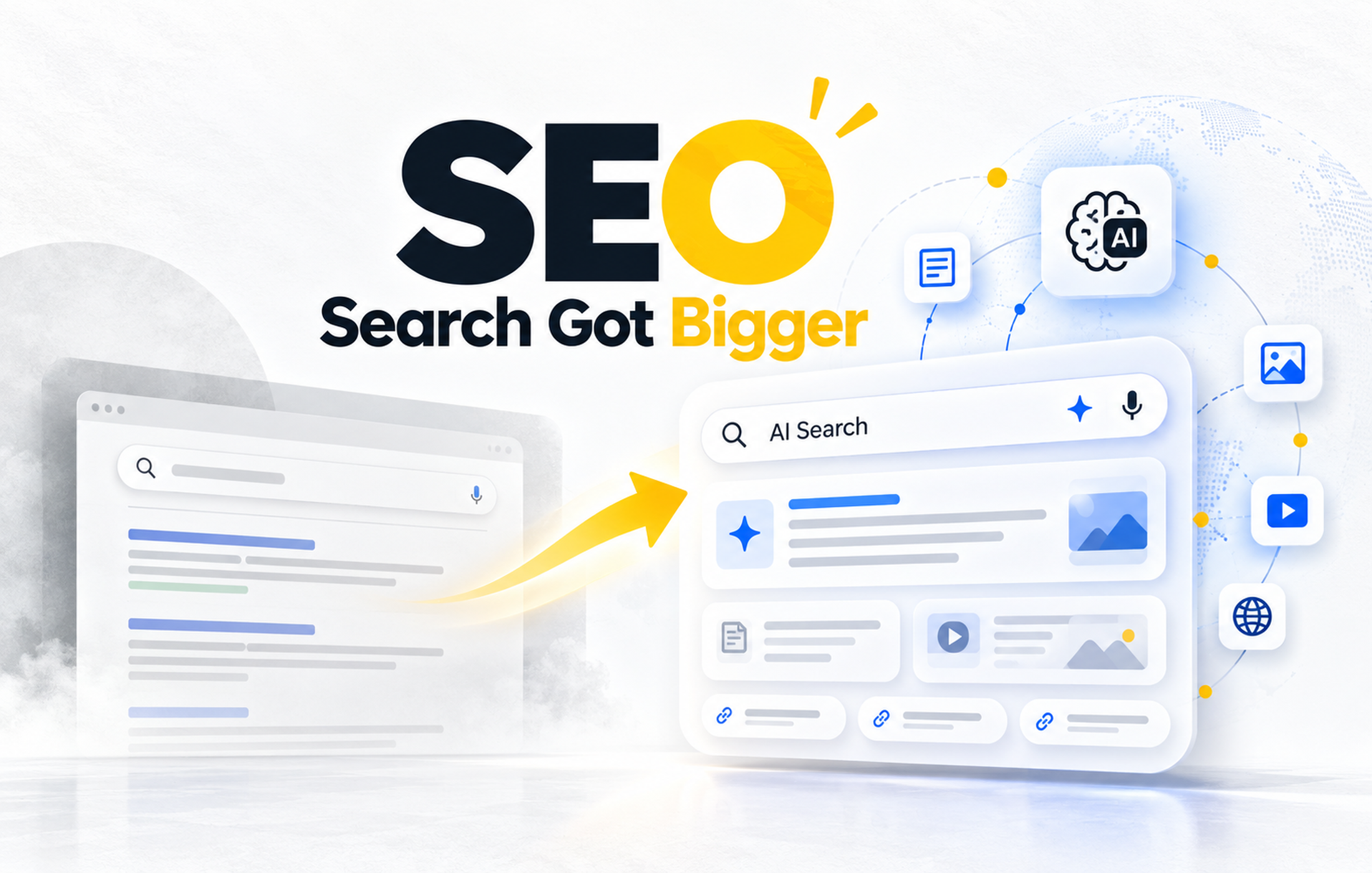
Every time something disrupts digital marketing, someone declares SEO dead. It happened when social media scaled. It happened with voice search. It is happening again now that AI tools have entered the picture.
Read from our experts how “SEO is not dead!” The definition of search has expanded, and most brands have not caught up with it yet.
Your potential customers are still searching for the same things. They want trustworthy businesses that answer their questions and solve their problems. What has changed is where they go to ask. Google remains important. It is no longer the only destination.
Is SEO Dead Now With AI?
No, AI search platforms still rely on indexed web content to generate answers. Google still processes over five trillion searches annually. Domain authority, page speed, structured content, and technical health all still influence which brands appear and get cited.
What AI has changed is the format of the result. Instead of returning ten blue links, tools like ChatGPT, Perplexity, and Google AI Overviews synthesise an answer directly on screen. The user reads that answer and often leaves without clicking anything. According to Seer Interactive’s 2025 research, organic click-through rates drop 61% on queries where a Google AI Overview appears, even for the page ranked number one.
Ranking is still necessary. Ranking alone is no longer sufficient.
Why Is Google Search So Much Worse Now?
For many queries, Google search has not gotten worse. But it has also gotten faster. AI Overviews answer straightforward questions immediately. The experience that feels worse is specifically for publishers and brands who relied on informational content to drive traffic. That traffic is now being answered before a click happens.
The shift is not uniform. Transactional and local queries, the ones where a buyer is ready to purchase or contact a business, still generate clicks. Commercial intent searches still send traffic to websites. The content category being disrupted most severely is top-of-funnel informational content that used to pull readers into a brand’s ecosystem. That funnel entry point has moved inside the AI answer itself.
Brands that understand this distinction stop trying to fight the zero-click reality and start optimising to be the source inside the answer.
Request a search visibility audit and we will show you exactly where your brand stands across Google, ChatGPT, and every platform between them.
What Is Generative Engine Optimization and How Does It Work?
Generative engine optimization is the practice of structuring content so AI systems can find it, understand it, and cite it confidently when generating answers.
Traditional SEO earns your page a position in a ranked list. GEO earns your brand a mention inside the answer that replaces the list.
The content signals that drive GEO are consistent with what has always made SEO work well. Clear, direct answers. Specific, verifiable data. Named expertise. Structured formatting that makes individual sections extractable without reading the full article. What GEO adds is the requirement for third-party corroboration. AI systems cross-reference your brand across directories, review platforms, press mentions, and community discussions before deciding whether to cite you. A brand that exists only on its own website gives AI systems very little to validate and very little reason to recommend.
How Do You Fix Brand Reputation in AI Answers?
Start with understanding what AI systems currently say about your brand when asked.
Test a set of high-intent queries across ChatGPT, Claude, Perplexity, and Google AI Overviews. Note whether your brand appears, how it is described, and whether the description is accurate. Outdated, inconsistent, or missing information across platforms feeds directly into how AI systems characterise your brand to buyers.
AI for brand reputation requires active management across the full digital ecosystem. Your Google Business Profile, industry directories, review platforms, and third-party mentions all contribute to the entity recognition AI systems build about your brand. Inconsistency across those sources is registered as a credibility signal and AI tools choose cleaner sources to cite instead.
The fix is methodical. Audit every platform where your brand appears. Synchronise descriptions, services, and key facts everywhere. Earn mentions on credible third-party sources through press, partnerships, and industry publications. Publish content that directly answers the questions buyers ask before purchasing in your category. Explore how Headstartt builds AI brand visibility and see the full approach we use for brands competing in AI-driven search environments.
How Do You Make Your Brand Appear in AI-Generated Answers?
The same way you build credibility anywhere. Clear information, consistent presence, and structured content that answers real buyer questions directly.
Three things determine whether AI tools cite a brand.
The first is content clarity. Every section of your website should open with a direct answer to the question it addresses. AI systems extract individual passages, not full articles. A section that buries the point in three paragraphs of context gets skipped for a source that leads with the answer in the first sentence.
The second is entity consistency. The same description of your business should appear across your website, Google Business Profile, directory listings, and social profiles. AI systems use pattern recognition across sources. Inconsistency reduces confidence. Confidence is what determines citation.
The third is third-party presence. Mentions in industry publications, positive reviews on credible platforms, and accurate listings in relevant directories all contribute to the external validation AI systems look for before recommending a brand.
Search engine marketing services that account for all three layers, traditional SEO, AI citation optimisation, and cross-platform brand presence, are what separate brands appearing in AI answers from brands watching competitors take that position.
How Headstartt Builds Search Visibility Across Every Platform
Search in 2026 happens across Google, AI tools, social platforms, and community forums. The brands showing up consistently across all of them are not running five separate strategies. They are running one strategy with the right foundation.
At Headstartt, we build search and brand visibility strategies for e-commerce brands that account for traditional SEO, generative engine optimisation, and the entity-level brand presence that AI systems require to cite a business confidently. We audit current AI visibility, identify the gaps causing brands to be overlooked, and build the content and reputation infrastructure that earns citations across every environment your buyers search in.
Search has gotten bigger. Your strategy should too.