Why High-Traffic Websites Still Fail to Convert?
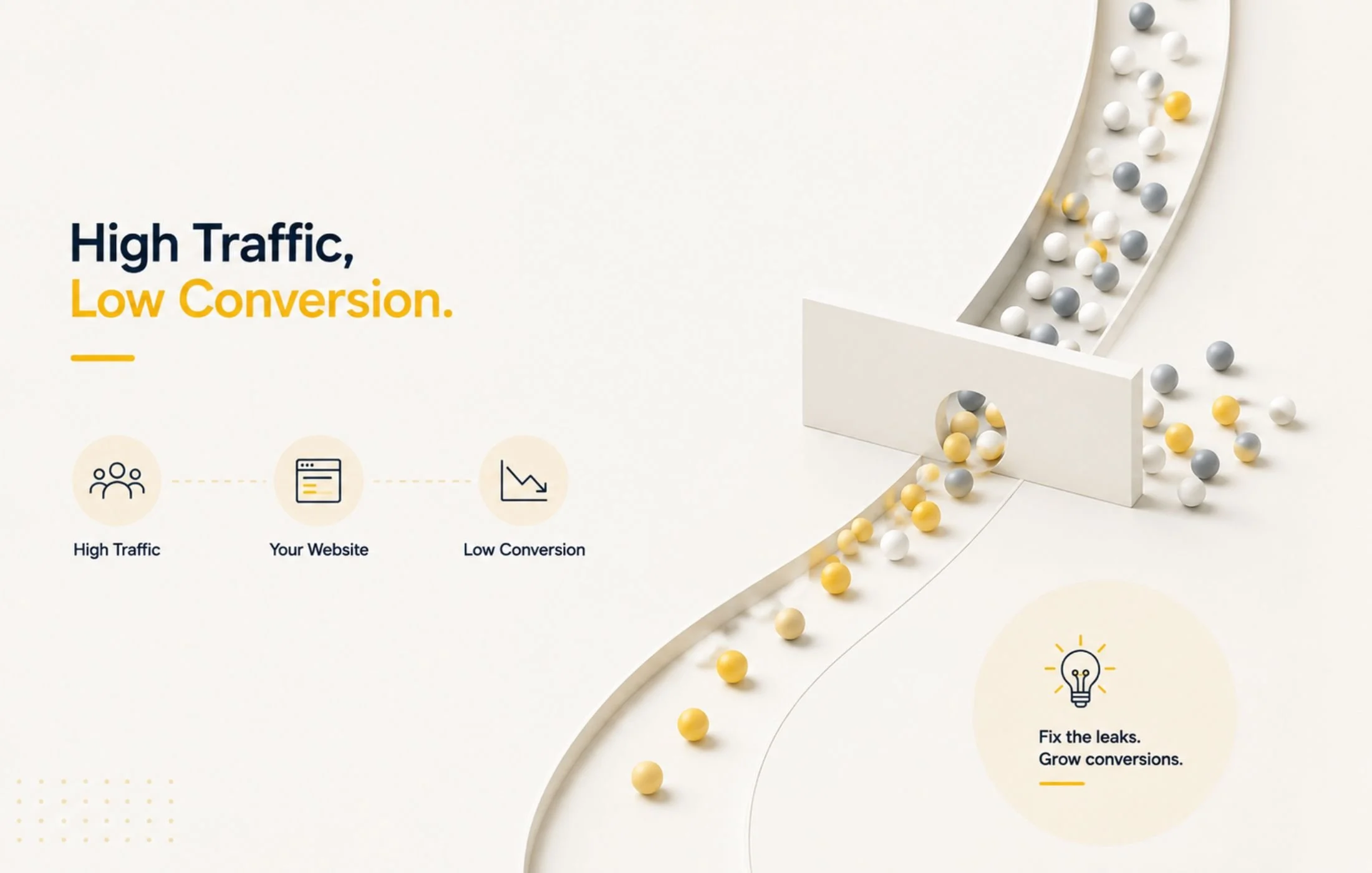
You refresh the analytics and the traffic looks healthy. Thousands of sessions, steady impressions, decent time on page. But the leads are not coming in, and the sales are not moving.
The instinct is to spend more on ads and drive more traffic. More traffic into a broken conversion path just means more people leaving without buying.
At Headstartt, we audit Shopify stores and e-commerce websites regularly and the same conversion leaks appear across almost every one. Here is what why website traffic doesn't convert actually comes down to and how to fix it before spending another dollar on acquisition.
Does High Traffic Always Mean High Intent?
No. Not every visitor who lands on your website wants to buy something. Some are researching. Some clicked a broad ad that half-matched their query. Some arrived through top-of-funnel content with no purchase intent at all.
If your traffic comes primarily from broad keywords or unqualified paid campaigns, conversion will stay low regardless of how good the website looks. Check where traffic is actually coming from and what those visitors were searching for. Misaligned traffic is a targeting problem, not a website conversion optimization problem.
Why Does the Page Fail Even When the Ad Works?
Because the page does not continue the conversation the ad started. Someone clicks a specific offer and lands on a homepage talking about brand history. The match breaks immediately and the visitor leaves.
Landing page optimization starts with one rule. The page must directly continue the conversation that brought the visitor there. Same offer, same language, same intent. Beyond that, every high-traffic page that fails to convert is missing at least one of these within the first scroll:
A headline that states clearly what the page offers and who it is for
A reason to trust the brand before asking for any commitment
One visible CTA that tells the visitor exactly what happens next
Improve Your Conversion Strategy and we will identify which of these is costing you the most.
What Friction Points Kill Conversions After the Click?
The most common ones are slow mobile load times, forms asking for too much upfront, surprise costs appearing at checkout, and competing CTAs pulling attention in multiple directions at once.
Conversion rate optimization is largely about removing the friction that stops already-warm visitors from completing the action they came to take. Each of these friction points reduces conversions by a measurable percentage. Combined, they can cut conversion rates in half on a page that would otherwise perform well. Explore our growth and performance optimisation approach to see how we audit and fix these systematically.
Why Would a Visitor Leave If They Were Interested?
Because the offer did not give them a clear enough reason to act right now. Vague value propositions create hesitation and hesitation sends buyers to a competitor who answered the question more directly.
Specific outcomes, visible testimonials near the CTA, clear return policies, and delivery information positioned before the purchase decision all reduce that hesitation at the exact moment it forms. Trust signals work best when they appear close to where the decision happens, not buried at the bottom of the page.
How Do You Diagnose the Real Conversion Problem?
Start with data, not instinct. Google Analytics 4 shows which pages have high exit rates on sessions that started with purchase intent. Microsoft Clarity shows where visitors stop scrolling, where they click without result, and where they abandon forms halfway through.
Find the single biggest drop-off point in your funnel first. Fix that one thing. Measure the result. Then move to the next. Redesigning a full page based on a guess is the most expensive CRO mistake a business can make.
How to Increase Website Conversion Rate Without More Traffic?
You must start with fixing the path for visitors already arriving:
Align every landing page to one specific audience and one specific intent
Rewrite headlines to state the benefit clearly
Cut form fields to the minimum needed to start the conversation
Place one dominant CTA above the fold and repeat it after key proof points
Fix mobile load speed before anything else if mobile traffic exceeds 50%
For ecommerce CRO services specifically, the highest-leverage fixes are almost always on the product page and at checkout. Simplifying the path from add-to-cart to confirmation and removing surprise costs eliminates the majority of cart abandonment.
When Is Hiring a CRO Agency Worth It?
When traffic is steady but revenue is not keeping pace, and the internal team lacks the analytics depth or testing infrastructure to fix it systematically. A CRO agency brings a structured process that identifies the highest-impact opportunity, implements a controlled change, and measures the result before moving to the next fix.
At Headstartt, we run this process across Shopify stores where traffic was strong and revenue was not following. The answer is almost never more traffic.
More visitors will not save a website that loses people before they convert. Fixing the right friction point, in the right order, with the right measurement in place will.
Get Expert CRO Support and let's find exactly where your website is losing conversions it has already earned.