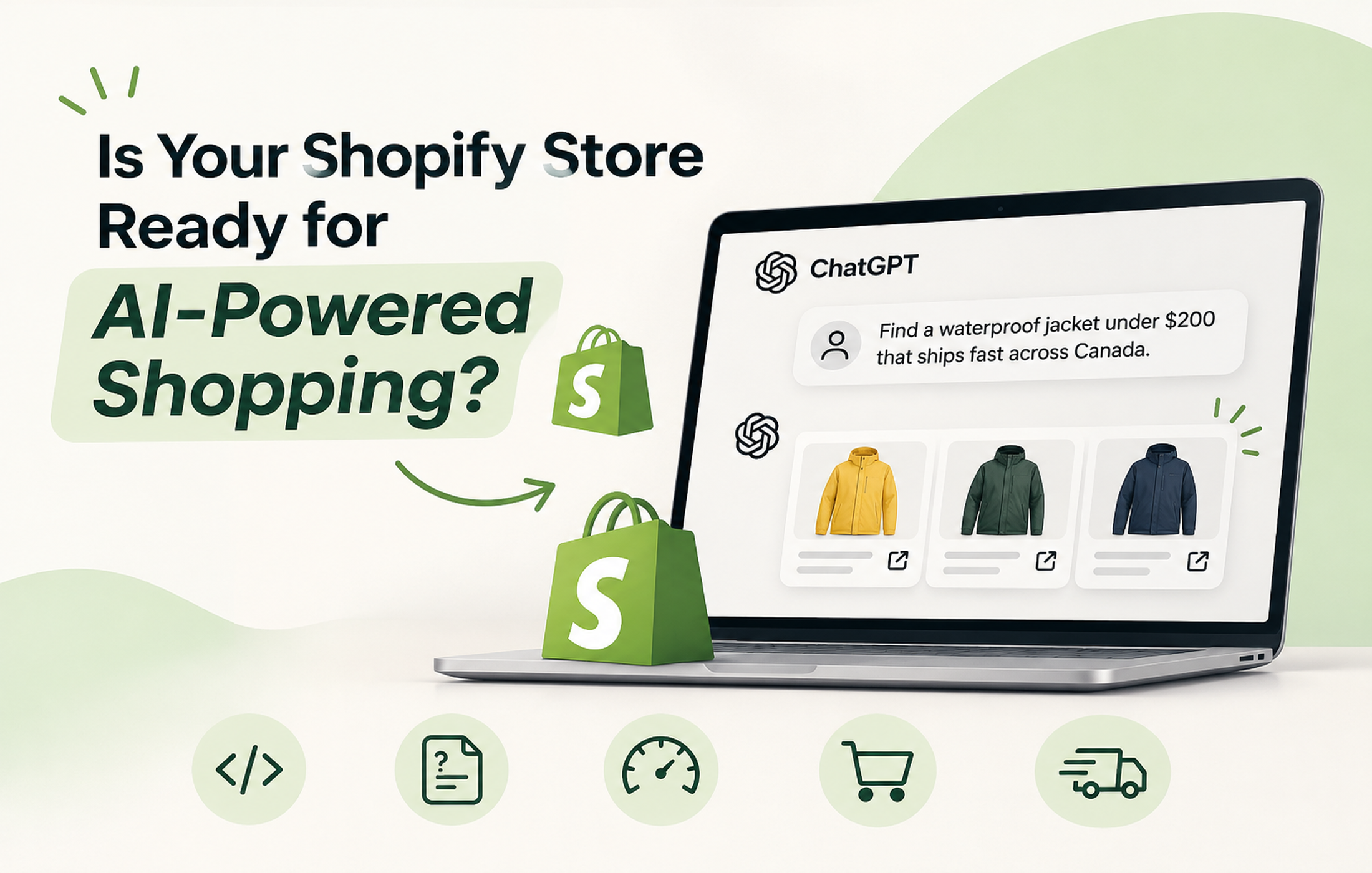
A shopper in Calgary types one sentence into ChatGPT. She asks for a waterproof jacket under $200 that ships fast across Canada. The assistant names three stores and links each one. She never opens Google.
Your store either made that shortlist or it did not. Headstartt builds Shopify stores for Canadian brands, and we see the same gap every month. Stores with strong ads and weak data stay invisible to AI. This guide covers the five fixes that change that.
How Do AI Shopping Assistants Decide Which Stores to Recommend?
They recommend stores whose data they can read, trust, and match to the question.
CIRA’s 2026 report found 46% of Canadians used generative AI in the past year, and 52% of those users treat it as a search engine. Shopify’s Agentic Storefronts now let AI agents read your catalogue and surface products inside chat.
Your store supplies the raw material. If your data is thin, slow, or inconsistent, the assistant picks a competitor with cleaner signals.
Is Your Product Data Clean Enough for AI to Read?
Start with schema markup. Your theme should output clean JSON-LD for products, prices, stock status, and reviews. Use Product, Offer, and AggregateRating types so an assistant reads price, stock, and ratings accurately.
Check one product page in Google’s Rich Results Test and fix every warning. Then confirm that price and availability match your Google Merchant Center feed. A mismatch between your site and your feed lowers trust, and assistants skip stores they cannot verify.
Submit your sitemap to Bing Webmaster Tools as well, since ChatGPT search leans on Bing’s index.
Do Your Pages Answer the Questions Shoppers Ask AI?
Shoppers talk to AI in full sentences. They ask whether a boot suits wet winters or whether a sofa fits a condo elevator. Your pages need to answer those questions in plain language.
Add a short FAQ to each top product and open every reply with the direct answer. Assistants pull self-contained passages, so a two-sentence reply on sizing or care earns more citations than a long brand story buried below the fold.
Does Site Speed Affect Whether AI Recommends You?
Yes. Crawlers visit fast storefronts more often, and fast pages score better on Core Web Vitals.
Aim for Largest Contentful Paint under 2.5 seconds, Interaction to Next Paint under 200 milliseconds, and Cumulative Layout Shift under 0.1. Compress images, remove unused apps, and strip theme scripts you never use. Test your top three product pages monthly.
Slow pages cost you twice, since impatient mobile shoppers bounce and crawlers visit less.
Is Your Product Copy Written for People or for Keywords?
Write for people first. Clear, benefit-led copy beats keyword stuffing with shoppers and with AI.
Compare “waterproof shell, taped seams, packs into its own pocket” with “best waterproof jacket buy waterproof jacket.” The first gives an assistant facts to quote. The second gives it nothing.
State the material, the use case, the fit, and who the product suits. Review the copy every quarter so details stay current.
Will Your Fulfillment Hold Up After an AI Recommendation?
Buyers who arrive from an AI recommendation come ready to buy and expect certainty. Show shipping costs and delivery windows on the product page. Sync inventory so you never sell stock you lack. Price in Canadian dollars with taxes clear.
Canadian shoppers also expect clear return terms, so publish your return policy in plain language where the buyer decides. Local fulfillment shortens delivery times and protects conversion once the shopper arrives. A great recommendation followed by a surprise shipping fee still loses the sale.
How Headstartt Gets Your Shopify Store AI-Ready
Headstartt runs these five fixes as one project. We audit your schema, speed, content, and fulfillment, rank each gap by revenue impact, and rebuild what holds you back. Our Shopify team works with Canadian brands every week, so we know where local stores lose recommendations.
Run a quick test first. Ask ChatGPT for the product you sell in your city and note which stores appear and why.
Ready to see where your store stands? Contact Headstartt for an AI readiness audit and get a prioritized fix list.